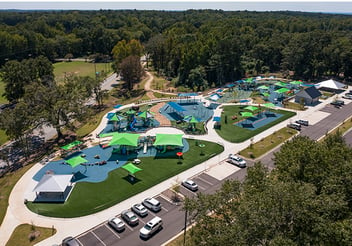
A new playground is more than an investment in equipment. It’s an investment in community engagement, childhood development, outdoor recreation and the long-term value of a shared space. Whether you’re planning a playground for a school, municipal park, church or community development, establishing a realistic budget is one of the most important steps toward bringing your vision to life.
As organizations begin planning playground projects for 2027, understanding the factors that influence costs can help prevent unexpected expenses, streamline decision-making and ensure the finished space meets community needs.
From site preparation and equipment selection to accessibility and long-term maintenance, evaluate these key considerations before setting your playground budget.
Define Your Playground’s Purpose and Audience
Before discussing equipment costs, determine who will use the playground and what you want the space to accomplish.
A playground designed for preschoolers will have different requirements than one intended for elementary school students or a public park serving children of various ages.
Consider these questions:
- What age groups will the playground serve?
- How many children are expected to use the space simultaneously?
- Will the playground need to accommodate children of varying abilities?
- Are there specific recreational or educational goals?
- Will the playground be part of a larger park or community improvement project?
Defining these priorities early helps guide equipment selection and prevents unnecessary spending on features that may not align with the project’s goals.
Planning Insight: Instead of starting with a list of desired equipment, begin with the experiences you want children and families to have. This approach can help create a more functional playground while making better use of available funding.
Evaluate Site Conditions Before Establishing Costs
One of the most commonly overlooked aspects of playground budgeting is site preparation.
Even if two playgrounds feature identical equipment, their total project costs can vary significantly depending on the installation location.
Important site considerations include:
- Grading and Leveling: Uneven terrain may require additional groundwork.
- Drainage: Proper drainage helps protect playground surfaces and reduce maintenance concerns.
- Accessibility: Accessible routes may require additional site improvements.
- Utilities: Underground infrastructure can influence equipment placement and excavation.
- Existing Structures: Removing outdated equipment or preparing an existing play area may add expenses.
In South Texas, factors such as intense rainfall, heat and varying soil conditions can also influence site design and material selection.
Conducting a site assessment early allows planners to identify potential challenges before finalizing their budgets.
Choose Playground Equipment that Balances Value and Play
Playground equipment is often one of the largest investments in a new project, but the lowest initial price doesn’t necessarily deliver the greatest long-term value.
High-quality commercial playground equipment is designed to withstand frequent use, changing weather conditions and years of active play.
When evaluating equipment options, consider play value, durability, age appropriateness, maintenance requirements and the variety of activities offered.
For example, incorporating climbing structures, slides, swings, interactive panels and imaginative play elements can create a more engaging environment than relying on a single type of activity.
The goal should be to maximize meaningful play opportunities rather than simply install the greatest number of components.
At Park Place Recreation Designs, Inc., helping communities select playground solutions that align with their goals, available space and budgets is an important part of the planning process.
Don’t Overlook Playground Surfacing
Safety surfacing is a critical component of playground design and should be included in the initial budget rather than treated as an afterthought.
Different surfacing options offer distinct benefits, maintenance requirements and installation costs.
Common options include:
- Engineered Wood Fiber: Often offers a lower initial cost but requires ongoing maintenance and replenishment.
- Poured-in-Place Rubber: Provides a continuous surface that can support accessible playground design, although installation costs are typically higher.
- Rubber Tiles: Offer a durable, modular option that may allow individual sections to be replaced.
Surfacing decisions should account for equipment fall heights, accessibility requirements, drainage and expected usage.
Planning Insight: A surface with a lower upfront price may require greater maintenance spending over time. Comparing lifecycle costs can provide a more accurate picture of the investment.
Make Inclusive Play a Budget Priority
Accessibility and inclusive design should be incorporated from the beginning of the planning process.
An inclusive playground goes beyond meeting minimum accessibility requirements. It creates opportunities for children with different physical, sensory and developmental abilities to participate in meaningful play experiences.
Consider incorporating accessible pathways, ground-level activities, sensory play panels, inclusive swings and gathering spaces for caregivers.
According to the U.S. Access Board, accessibility should be considered early in playground planning, including equipment selection, circulation routes and layout.
Planning for inclusion from the start can also help avoid costly modifications later.
Account for Shade and Site Amenities
In South Texas, shade is more than an attractive addition. It can significantly improve playground comfort during warmer months.
Shade structures, covered seating, benches, picnic tables and trash receptacles all contribute to a welcoming recreational environment.
These amenities should be considered alongside playground equipment rather than added after the primary budget has been exhausted.
For larger projects, planners may also consider walking paths, outdoor fitness equipment or splash play features.
While not every amenity needs to be installed immediately, incorporating them into the original design can simplify future expansion.
Plan for Installation, Safety and Maintenance
The cost of a playground extends beyond purchasing equipment.
Professional installation, transportation, inspections and ongoing maintenance all contribute to the total investment.
Safety deserves particular attention. According to the U.S. Consumer Product Safety Commission (CPSC), more than 200,000 children visit U.S. hospital emergency rooms annually for injuries associated with playground equipment. Falls are responsible for many of these injuries.
This highlights the importance of appropriate equipment, protective surfacing, proper installation and routine inspections.
When establishing your budget, consider both immediate construction expenses and the resources needed to maintain the playground for years to come.
Explore Funding Opportunities and Phased Construction
A limited initial budget doesn’t necessarily mean compromising your playground vision.
Schools, municipalities and community organizations may be able to explore grants, fundraising campaigns, sponsorships and cooperative purchasing programs.
Park Place Recreation Designs Inc. participates in purchasing programs such as BuyBoard and TXMAS, which may help eligible organizations simplify procurement.
Another option is phased construction.
For example, a community could install its primary playground structure and essential safety features in 2027, then add shade structures, seating or additional play elements in subsequent years.
Park Place Recreation Designs Inc. offers modular playground solutions that can be expanded over time, allowing organizations to plan for future improvements while working within current financial limitations.
Start Planning Early for 2027
Successful playground projects require coordination among administrators, designers, equipment manufacturers, installers and community stakeholders.
Beginning the planning process early provides more time to evaluate design options, identify funding opportunities, secure approvals and establish realistic installation schedules.
It also allows organizations to address potential challenges before they affect the project timeline.
Rather than selecting equipment based solely on an estimated budget, working with an experienced playground design partner can help establish a comprehensive plan that considers the entire project.
Bring Your 2027 Playground Vision to Life with Park Place Recreation Designs Inc.
A thoughtfully planned playground can provide years of enjoyment, encourage physical activity and create meaningful gathering spaces for families and communities.
By considering site preparation, equipment selection, inclusive design, safety surfacing, shade and long-term maintenance before setting your budget, you can make informed decisions that maximize your investment.
With more than 40 years of experience serving South Texas, Park Place Recreation Designs, Inc. helps schools, municipalities, parks and community organizations turn playground ideas into engaging recreational spaces. From initial design and 3D renderings to equipment selection and installation, our team can help guide your project from concept to completion.
Planning a new playground for 2027? Start now to make your vision a reality.
Visit our website to explore playground equipment, design services and recreational solutions or today to start planning a playground that fits your vision, community and budget.