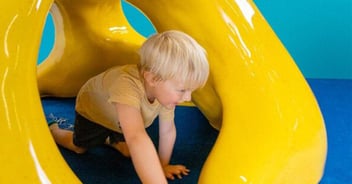
For churches, childcare centers and preschools, creating spaces where children can play, move and connect is an important part of serving families. But in South Texas, outdoor play doesn’t always fit comfortably into the daily schedule. Extreme heat, intense sunshine, thunderstorms and other weather conditions can quickly change outdoor plans.
That’s where an indoor playground can become a valuable addition to a facility.
Indoor soft play provides children with a dedicated environment where they can climb, crawl, slide, explore and interact throughout the year. For churches looking to strengthen their family ministries and childcare centers wanting to provide more consistent opportunities for active play, a thoughtfully designed indoor play space can serve children regardless of what the South Texas forecast has in store.
Why Indoor Play Makes Sense in South Texas
South Texas offers plenty of opportunities for outdoor recreation, but anyone who lives here knows that the weather can make outdoor play challenging at certain times of the year.
Summer temperatures frequently climb into the 90s and beyond, while high humidity can make conditions feel even hotter. Intense sunshine is another consideration, particularly during the middle of the day. Thunderstorms and periods of heavy rain can also send children indoors unexpectedly.
An indoor playground provides another option.
Childcare centers can maintain opportunities for active play without relying entirely on outdoor conditions. Churches can use indoor play areas for Sunday programming, weekday preschool programs, parents’ groups, Vacation Bible School, community events and other family-focused activities.
Instead of viewing indoor play as a replacement for outdoor playgrounds organizations can think of the two as complementary spaces that give children more ways to play throughout the year.
What is Indoor Soft Play?
Indoor soft play typically combines padded, age-appropriate play components to create an environment designed especially for younger children.
Depending on the space and intended age group, soft play equipment may include tunnels, small slides, climbing features, ramps, crawl-through elements, interactive panels and imaginative play components.
The goal isn’t simply to fill a room with equipment. A thoughtfully designed indoor playground considers how children will move through the space, which ages will use it, how adults will supervise the area and how different activities work together.
The Consumer Product Safety Commission’s Public Playground Safety Handbook provides useful guidance regarding concepts such as age appropriateness, equipment layout, supervision and use zones. Those principles can help inform conversations about thoughtfully planning children’s play environments.
Indoor Playgrounds Can Help Churches Serve Families
For churches, an indoor playground can become much more than another feature of the children’s ministry area.
It can create a place where families naturally gather.
Children might play before or after Sunday programming while parents connect nearby. During the week, the same space could support preschool programs, Mother’s Day Out programs, Bible studies with childcare, family events, community outreach or other ministries.
For churches focused on welcoming young families, the physical environment can help reinforce that mission.
An indoor playground for a church can communicate that children and families were considered when the facility was planned. Instead of children’s areas being used only during Sunday services, indoor soft play can help churches create flexible spaces that support programming throughout the week.
Childcare Centers Can Keep Kids Moving Year-Round
For childcare centers and preschools, active play is often an important part of the daily routine. South Texas weather can occasionally make outdoor play impractical, particularly during the hottest parts of the year.
Indoor soft play gives teachers another option.
Toddlers may benefit from low-level crawling, climbing and sensory experiences, while older preschoolers may enjoy slides, tunnels, interactive elements and more challenging movement.
The key is choosing equipment that matches the developmental abilities of the children using it.
Facilities serving several age groups should also consider whether separate play areas or distinct activities would be appropriate. Designing around the actual children who will use the playground can create a better experience than taking a one-size-fits-all approach.
You Don’t Need a Huge Space
One advantage of indoor soft play is that it can be adapted to many different environments.
A church doesn’t necessarily need an empty gymnasium, and a childcare center doesn’t need to construct an entirely new wing.
Existing rooms may have more potential than expected.
When evaluating a possible indoor playground space, factors such as room dimensions, ceiling height, entrances and exits, columns, flooring, visibility and surrounding uses should all be considered. Capacity matters, too. A play area designed for a small preschool classroom will look very different from one intended to serve a large church congregation.
Working with an experienced recreation design team can help organizations determine how to make effective use of their available square footage without overcrowding the room.
Don’t Forget About Supervision and Visibility
The equipment itself is only one part of a successful indoor play environment.
Church staff, volunteers, childcare employees and parents need to be able to supervise children effectively. That makes visibility an important part of the design process.
Consider how adults will see into and across the play space. Think about entrances, exits, seating areas and places where equipment could potentially block sightlines.
Planning these details before equipment is installed can help create a more functional environment for both children and the adults supervising them.
Make Accessibility Part of the Plan
Play spaces should also consider children with different abilities and how they can participate.
The U.S. Access Board’s guidance for play areas provides information about accessible play components, routes, transfer systems and other accessibility considerations.
Rather than treating accessibility as something to address after the primary design is finished, churches and childcare centers can make it part of the conversation from the beginning.
Organizations should discuss their facility, users, applicable requirements and accessibility goals with their playground provider when planning an indoor installation.
Think Beyond the Play Equipment
When planning an indoor playground, it’s easy to start by asking, “What equipment should we buy?”
A better first question may be, “How do we want families and children to use this space?”
Consider:
- What ages will use the playground?
- How many children could use the space at once?
- How will adults supervise the area?
- Where will parents or caregivers sit?
- How will children enter and exit?
- How does the space fit into existing programming?
- How can children with different abilities participate?
- Could the organization’s needs change in the future?
Answering these questions can help create an indoor playground that works as part of the facility rather than simply occupying space within it.
A Year-Round Investment in Families
For a childcare center, an attractive indoor playground can also become a valuable feature when prospective parents tour the facility. Families aren’t only evaluating classrooms. They’re looking at the overall environment where their children will spend their time.
For churches, indoor soft play can support children’s ministry while also creating another gathering place for the broader community.
And in South Texas, perhaps one of the biggest advantages is simple: kids can play regardless of how hot, rainy or unpredictable it is outside.
Create an Indoor Playground Designed for Your Facility
No two churches, preschools or childcare centers are exactly alike. The best indoor playground design should reflect the available space, ages served, expected number of users, programming needs and goals of the organization.
Park Place Recreation Designs, Inc. works with organizations throughout South Texas to create play environments built around their communities. From evaluating available space and selecting appropriate soft play equipment to developing a layout that considers movement, visibility and accessibility, thoughtful planning can transform an underused indoor area into a destination for play.
Whether you’re planning a new church facility, updating a children’s ministry area, expanding a childcare center or looking for ways to make an existing space more useful, indoor soft play can create new opportunities for children and families throughout the year.
Ready to explore what’s possible indoors? Contact Park Place Recreation Designs, Inc. to start planning an indoor playground for your South Texas church, preschool or childcare center.